During my first year in a Master’s program, I was a “deer in the headlights” who happened to stumble into a course on George MacDonald. I knew he was admired by C.S. Lewis and J.R.R. Tolkien, so I gave him a shot. Little did I know that three years later, I would be finishing a major thesis on his work.
In that classroom, I watched undergraduates fumbling through 20-minute presentations on Lilith—complete with costumes, candles, and dramatic music. While I appreciated the cookies they brought, something was missing: they were being creative in how they taught, but not in what they taught.
My professor eventually gave me the advice that changed everything: “One of the worst things you can do as a teacher is teach a creative novel without any creativity.” This realization led me to a lifelong obsession with a single, massive word: Imagination.
What is Imagination?
The word “imagination” is complicated because it has as many definitions as there are people to ask. It ranges from The Last Unicorn to A Clockwork Orange; from architectural blueprints to cloud-gazing. We are often skeptical of it while simultaneously promoting it.
When my students define it, they describe a “hidden power” used for writing stories. They aren’t wrong, but George MacDonald takes it further, calling it “the faculty which gives form to thought.”
A Working Definition
If we look at the Latin imaginari (“to form a mental picture”) and the Old French imaginer (“to sculpt, carve, paint”), we find a “noun of action.”
Imagination is the activity of a person creating mental images that they then refer back to in order to make sense of, or give meaning to, a situation.
Imagination isn’t a mystical enchantment reserved for “visionaries.” It is a muscle. It is the process of logging images, recalling those images, and acting according to those images.
Why It Matters
When I say the word “tree,” you use your imagination to recall a specific image. That is a simple act. But what happens when I say words like “racism,” “goodness,” or “evil”?
The images that pop into your head regarding humanity and God are incredibly important because what we imagine influences how we act. If we want to change our behavior, we must first change our mental “log.” A “re-imagining” must occur for there to be long-lasting change.
The Power of the “Good Spell”
“Re-imagining” happens through experience and emotion, but our personal experiences are limited. This is where Art—and specifically Story—becomes an exceptional tool.
If an artist is someone who “sculpts and carves” our imagination, then a storyteller is someone who gives us new images of the world to live by. This is why C.S. Lewis claimed that George MacDonald’s fantasy “baptized his imagination.”
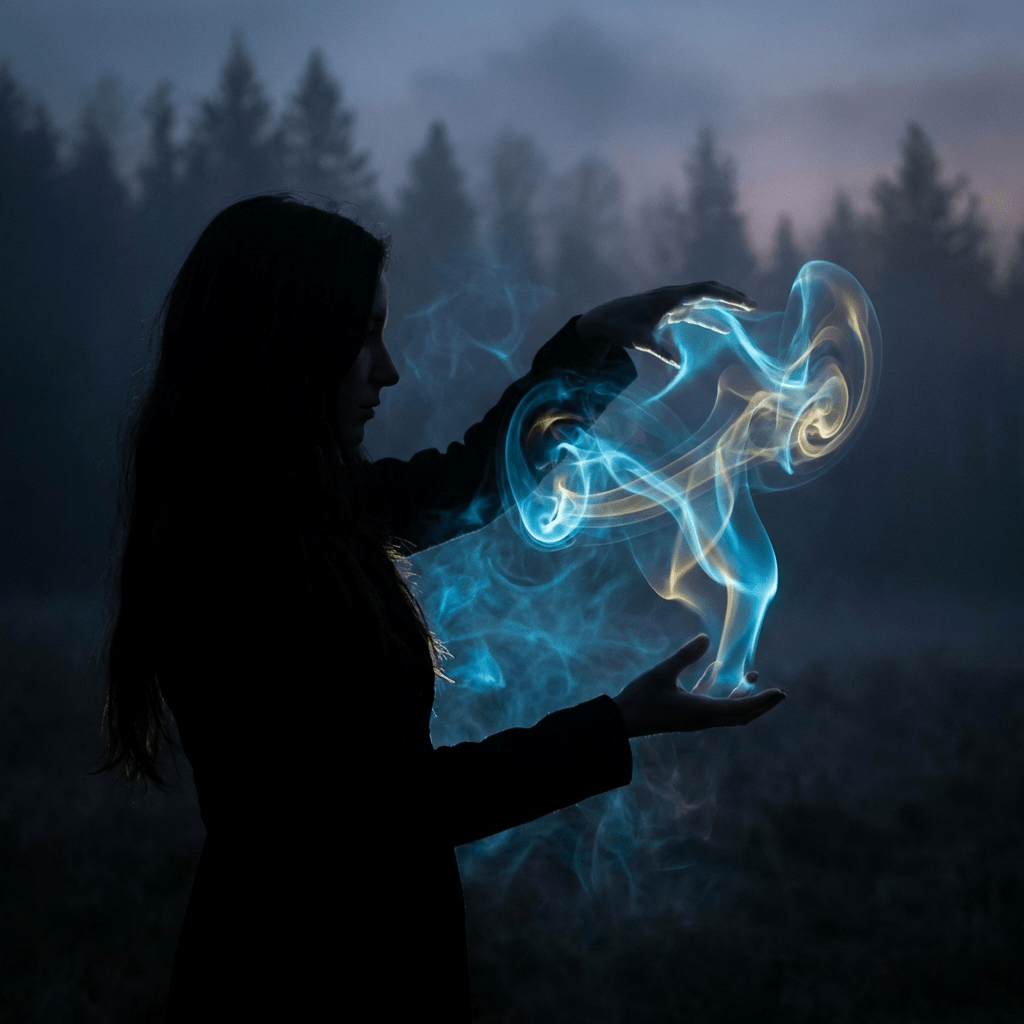
We wield a great sword of imagination when we write, and we submit to a transformative process when we read. We are all currently seeing “through a glass, darkly,” but through the wise use of stories, we can begin to see the shapes of truth more clearly.
 The Wise Imagination
Leave a comment