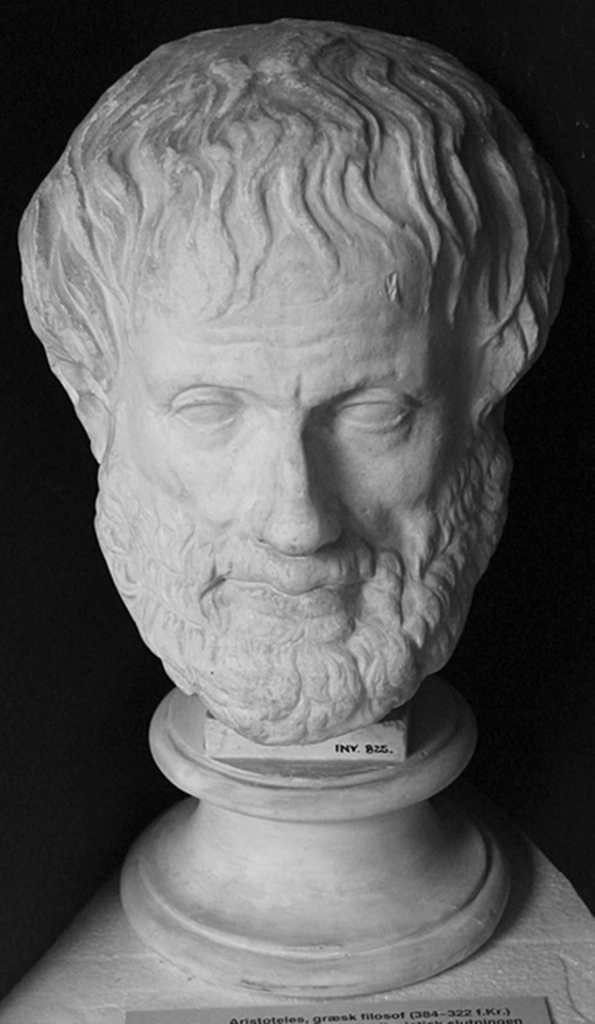
Aristotle and the shape of happiness in <em>Nicomachean Ethics</em>, Book I
Raising children is “super easy,” said no parent ever.
At the moment, our family is navigating high school decisions, possible paths after graduation, learning to drive, school sports, and sports outside school. That is only a partial list. Our days are full, although “drowning” may sometimes be the more honest word.
In the rare quiet moments, my wife and I often look back at the decisions we have made and ask whether they are helping our children become the people we hope they will be. Sometimes we feel encouraged. Other times, we are fairly certain we are ruining perfectly good human beings.
Like many parents, I have often said, “I just want my kids to be happy.” I still mean it, but I have also grown suspicious of that sentence. I do not mean that I want my children to live without disappointment, difficulty, or pain. No parent can promise that kind of life, and I am not sure it would be a good life even if we could.
What I really want is something deeper. I want my children to live with purpose. I want them to recognize what is good, to love what is worthy of love, to use their gifts well, and to remain faithful when doing the right thing costs them something. I want them to experience joy, certainly, but also to become the kind of people who can live meaningfully when happiness, in the ordinary sense, feels far away.
That raises one of the oldest questions a parent can ask: How do we teach our children to live well?
King Solomon asks that question throughout the book of Proverbs. Again and again, he addresses the reader as a father speaking to a son. Proverbs is not simply a collection of clever sayings. It is a wisdom manual for a good life. It speaks about friendship and anger, work and money, pride and speech, justice and desire. Its aim is not merely to help a young person know more, but to help that person become wise: to recognize the grain of God’s world and learn how to live within it.
Aristotle writes from a very different world, yet the Nicomachean Ethics begins with a surprisingly similar concern. He wants to know what the highest human good is, what it means for a life to flourish, and how a person might actually become good. He is not interested in goodness as an abstract definition alone. Like Solomon, he is interested in the formation of a life.
Even the book’s title carries a family connection. Nicomachean Ethics most likely points to Nicomachus, Aristotle’s son, who may have received or edited the work. An older tradition says Aristotle dedicated it to him, though some scholars have suggested that the name refers instead to Aristotle’s father, who was also called Nicomachus. We cannot settle the title with certainty, but the family name suits a book concerned with what one generation hands to the next.
The work reads less like a polished book written for a quiet library than like carefully refined lecture notes from Aristotle’s teaching at the Lyceum in Athens during the 330s and 320s BCE. It belongs to what he calls practical philosophy. Aristotle places ethics under “political science,” the study of how human beings flourish together, and he assumes that his readers have already been formed by at least some decent habits. An argument can sharpen our vision, but it cannot by itself make us love what is good. The point of ethics, Aristotle insists, is not simply knowledge. It is action.
Whether we are raising children, teaching students, or trying to make sense of our own choices, the question remains: What do we mean when we say that we want a happy life?
Do we mean a good mood? A life with little pain? Enough money to stop worrying? The freedom to do what we want? A reputation other people admire? Most of us carry several answers at once, and they do not always agree. We may pursue one thing all day while claiming that something else matters most.
Aristotle begins inside that tension. Book I does not hand us a quick list of moral rules, but it asks a more unsettling question: What are all our choices ultimately for?
His answer is usually translated as “happiness.” But Aristotle means something larger and more demanding than feeling cheerful. He is asking what it would mean for a human life, taken as a whole, to go well.
Every choice reaches toward a good
Everything we deliberately do aims at some good. Medicine aims at health. Strategy in a basketball game aims at victory. Building aims at a finished house. We study for a qualification, work for an income, exercise for health, and save money for future security.
Sometimes the activity is itself the goal. At other times, we act to produce something beyond the activity. I may play guitar because playing is worth doing, or I may practise one difficult song so that I can perform it later. Our aims also form a hierarchy. I tighten a screw for the sake of repairing a bicycle; I repair the bicycle so I can ride to work; I ride to work so I can earn a living; I earn a living so that I can support a life I believe is worth living.
But the chain raises a question. If every goal exists only for the sake of another goal, desire becomes an endless corridor with no room at the end. Aristotle therefore asks whether there is some final good that we desire for its own sake and that gives order to everything else.
Without such an end, we can be very busy without knowing what our busyness is for.
Ethics is practical, political, and necessarily imprecise
Aristotle calls the inquiry “political” because the good life is never merely private. Families, schools, laws, customs, and communities shape what we learn to love. A person can make choices, but no one forms a character alone. The good of a community is therefore not separate from the good of its members.
This does not mean that Book I is a party platform. Aristotle is using politics in its older and broader sense: the ordering of life together toward human flourishing. Ethics asks what makes a person good; politics asks how a community might cultivate and protect that goodness.
He also warns us not to expect mathematical precision. Human life is variable. Courage does not look exactly the same in a soldier, a parent, a teacher, and a frightened child. A principle can guide us without functioning like an equation. Aristotle wants as much clarity as the subject allows, but no more.
That caution matters. Moral thinking can become a way of avoiding moral action. We refine our definitions, qualify our language, and wait for perfect certainty. Aristotle is less interested in whether we can win an argument about goodness than in whether the argument helps us live well.
The good must be lived, not merely defined
Book I includes a difficult but important disagreement with Plato, Aristotle’s former teacher. Plato had spoken of the Good as a single, transcendent Form that gives every good thing its goodness. Aristotle questions whether one universal Good can do the practical work ethics requires.
“Good” is said in many ways. The good sought by medicine is health; the good sought by strategy is victory; the good sought by craftsmanship is a well-made object. Even if a separate Form of the Good exists, Aristotle argues, a doctor still needs to know how to heal this patient, and a leader still needs to know what justice requires here.
This is not a rejection of truth beyond preference. It is a refusal to let the word good float above the lives in which goodness must take shape. Ethics needs an attainable human good, something that can order our actual choices.
Happiness means flourishing, not feeling cheerful
Most people, Aristotle says, agree on the name of the highest good: eudaimonia. The trouble begins when we try to say what it is.
The English word happiness can mislead us because it often names a feeling. Eudaimonia is closer to flourishing, living well, or doing well. It describes the quality of a life, not the emotional weather of an afternoon.
Aristotle considers several popular answers.
A life devoted to pleasure is too narrow. Pleasure matters, and Aristotle is not arguing that goodness must feel miserable. But pleasure alone cannot tell us whether the activity we enjoy is worthy of a human being.
A life devoted to honour is also unstable. Honour depends too heavily on the people who give it. We usually seek honour as evidence that we are good, which suggests that virtue, not recognition, is the deeper object of our desire.
Wealth is the clearest failure. Money is useful precisely because it is useful for something else. It is a means, not a final end.
The highest good, Aristotle concludes, must be both final and self-sufficient. We choose it for itself, not as a tool for getting something beyond it. And by “self-sufficient,” he does not mean isolated. Human flourishing includes family, friendship, and civic life. The good life must be complete enough to make life choiceworthy, but it is never a solitary achievement.
Happiness is function
To give happiness more content, Aristotle asks what is often called the “function argument.” A good flute player plays the flute well. A good eye sees well. If we can identify the characteristic activity of a human being, perhaps we can understand what it means for a human being to live well.
Nutrition and growth cannot be the answer because plants do those things. Sensation cannot be the answer because animals perceive the world too. Aristotle locates distinctively human life in our capacity for reason, including both thinking and acting under the guidance of reason.
The human good, then, is not simply having reason or possessing virtue. It is the activity of the soul in accordance with virtue. A musician may own an instrument and know the notes, but excellence appears in the playing. In the same way, justice, courage, and wisdom become real through activity.
This is one of Book I’s most important points. Happiness is not a prize we receive after we have become good, but it is the excellent activity of a human life. It is found in doing what is good, well.
“A good life cannot be reduced to what we own, what we feel, or what other people call us. It must be embodied in what we repeatedly do.”
Aristotle’s argument is open to questions. Do human beings have one defining function? Is reason the best way to identify it? Those questions are worth asking, but even a sceptical reader can feel the challenge: human excellence has to appear in the pattern of a life. It cannot remain an idea we admire but never practise.
One good day is not yet a good life
Aristotle adds a famous qualification: happiness must be considered “in a complete life.” Then comes the memorable proverb: “one swallow does not make a summer” (Nicomachean Ethics I.7, 1098a18–19).
One brave act does not yet make a courageous person. One generous gift does not settle the shape of a life. Character requires some steadiness across time, and flourishing cannot be measured by a single shining moment.
Yet, Aristotle is not claiming that good character makes us invulnerable. He says that happiness needs some external goods. Friendship, health, resources, family, and a measure of good fortune give us opportunities to act well. Severe suffering can damage even a noble life.
This creates a tension that Book I refuses to solve cheaply. Our flourishing depends on our activity, so we are not merely victims of fortune. But we are embodied and social creatures, so fortune still matters. Aristotle’s good person is stable without being untouchable.
That seems both less comforting and more humane than the promise that attitude alone can conquer every loss.
Reason must learn to govern desire
Book I ends by turning toward the soul. Aristotle distinguishes between a part that has reason and a part that does not. The non-rational part includes basic life processes such as nutrition and growth, but it also includes appetite and desire.
Desire is not rational in the same way thought is, yet it can listen to reason. Aristotle compares this to listening to the counsel of a parent or friend. Our emotions and appetites are not simply enemies to be crushed. They must be educated until they can respond to what reason sees as good.
This distinction prepares the way for the rest of the Ethics. Intellectual virtues develop our ability to think well. Moral virtues form our desires, emotions, and choices so that we take pleasure in what is genuinely good. Book I sketches the destination; the later books ask how a person becomes capable of reaching it.
Book I leaves us with a better question
Aristotle does not finish Book I by making happiness easy. He makes the question richer.
The good life is purposeful because our smaller aims need a final end. It is active because flourishing consists in the exercise of our capacities. It is moral because those capacities must be shaped by virtue. It is social because human beings live in families and communities. It is vulnerable because even the virtuous need friends, resources, and some measure of fortune. And it takes time because a life cannot be judged by a single day.
Perhaps that is why Aristotle still feels surprisingly close. We are surrounded by advice about how to feel happier, work more efficiently, and protect our comfort. Book I asks us to step back from all three.
Not, “How do I feel about my life today?”
But, “What kind of life are my choices becoming?”
This article was prepared with the Oxford World’s Classics text in view.
Leave a Reply