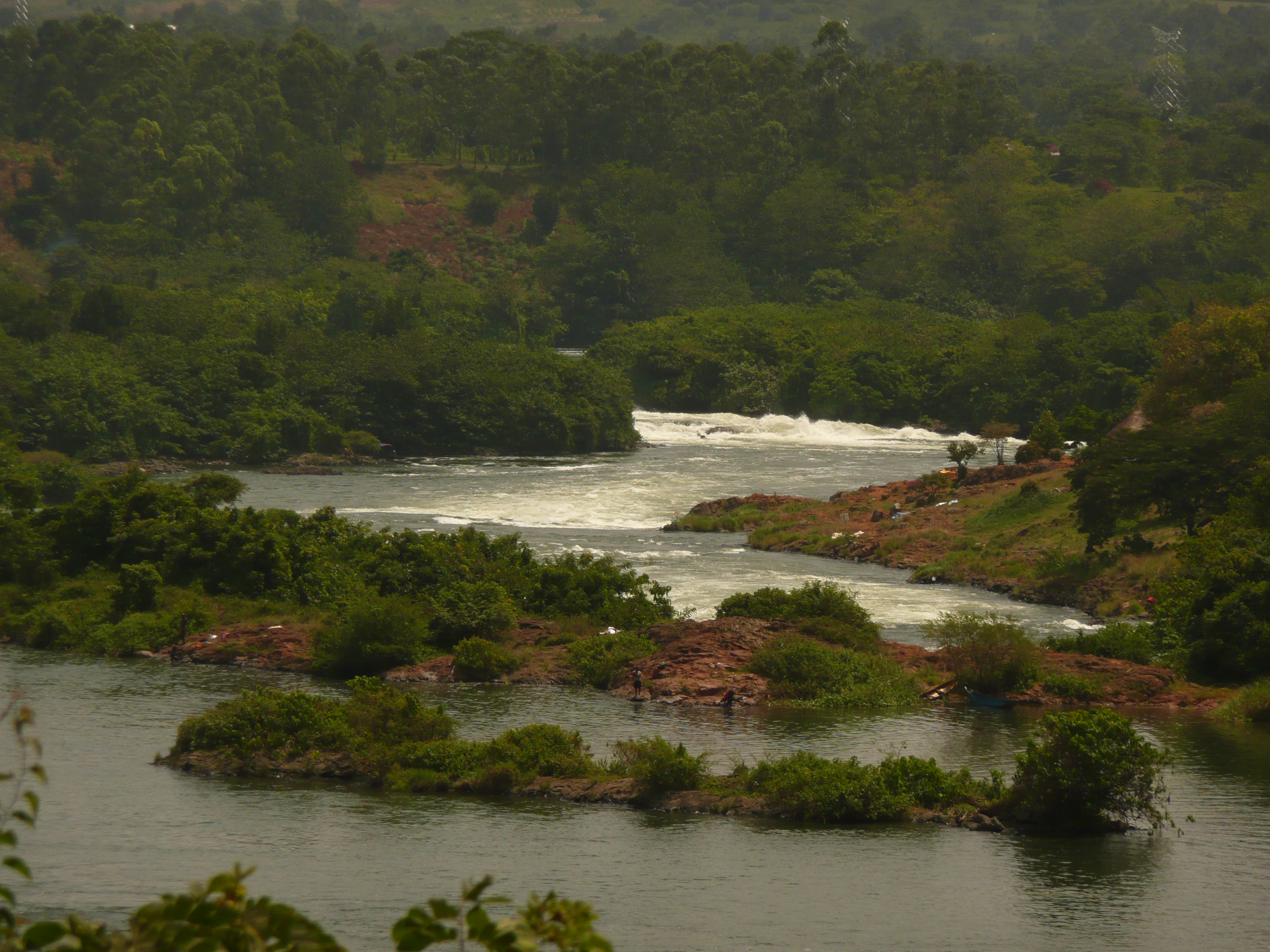
Four years ago, I had the surreal experience of whitewater rafting the Nile River in Jinja, Uganda. Over a six-hour journey, our group navigated twelve Class 4 and 5 rapids. I was thrown from the raft or flipped over entirely on four of them. It was exhausting, terrifying, and ultimately transformative. I walked away with a lesson I hope never to forget: I am not in control.
The Illusion of Protection
The journey began with a “husbandly” promise. My wife, though a brave adventurer and a strong swimmer, was anxious. I gathered my most eloquent wisdom and told her, “Don’t worry—everything will be okay. I’m sitting right behind you. I will protect you.”
I was sincere. I truly intended to be her bulwark against the river. But I had drastically overestimated my own standing in the natural order.
During the second rapid, the raft jettisoned us all. When I surfaced, she was nowhere to be seen. I was bobbing like a wine cork, helpless against the current. It wasn’t until we were both hauled back into the boat—her holding a paddle snapped clean in two—that the devastating realization hit me: My courage and good intentions were no match for the force of the Nile.
I felt an utter fragility. No amount of willpower or “inspirational speech” could change the fact that I was at the mercy of the river. I could no longer assure my wife that it would be “okay,” because I truly didn’t know if it would be.
The Stupor and the Shout
I fell into a self-indulgent stupor of fear until the Ugandan guide steering our raft snapped me out of it. “Paddle hard!” he shouted.
I realized then that while I couldn’t defy the current, I was still called to participate in the journey. I had to stop “navel-gazing” about my lack of control so I could actually enjoy the ride. This wasn’t Nihilism—it was simply the peace that comes from surrendering to the truth of the situation.
Gandalf, Bilbo, and the “Little Fellow”
Years later, I am reminded of the end of The Hobbit. After Bilbo has survived trolls, spiders, and dragons, Gandalf offers him a bracing bit of perspective:
“Surely you don’t disbelieve the prophecies, because you had a hand in bringing them about yourself? You don’t really suppose, do you, that all your adventures and escapes were managed by mere luck, just for your sole benefit? You are a very fine person, Mr. Baggins… but you are only quite a little fellow in a wide world after all!”
Bilbo’s response is perfect: “Thank goodness!”
Bilbo is the hero of his journey, but he is not the hero of The Journey. Tolkien reminds us that the hero of one day is not the hero of a lifetime. Bilbo’s greatness lies not in his power, but in his ability to overcome the fear of being “out of control.” He begins the story hating adventures because they “make you late for dinner” and ends it by accepting his smallness in a vast, beautiful world.
The Gospel of Losing Control
My experience on the Nile taught me something vital about my identity in Christ. We often limit our experiences based on whether we can control the outcome. We turn away adventures because they cause discomfort or disorder. We seek to keep our identities safe, but in doing so, we actually lose them.
This dichotomy is at the heart of the words of Jesus:
“Whoever finds his life will lose it, and whoever loses his life for my sake will find it.” (Matthew 10:39)
Like Bilbo, I jockey for position and reputation, not realizing that the harder I grasp for control, the more I slip into the slavery of my own anxiety.
I am not the hero of my life; in fact, I am often the villain, thrashing against the current and rejecting a position much higher than my own. But when my identity is rooted in Christ’s ability instead of my own, I find an abundance of joy. I may be just a “little fellow” in a wide world, but the One who holds the river also holds me.
And for that, I can only say: “Thank goodness!”
Leave a Reply