C.S. Lewis
-

I can’t recall the first time I heard the adage, “If you don’t have anything nice to say, don’t say anything at all.” It’s an interesting statement if you think about it, because most of us understand the gist without ever really pulling it apart. I mean, is it better to lie than to tell…
-

For anyone who does or has taken public transit on a regular basis, you will understand this story. It was not so long ago that I took the bus to and from work every day. 50 minutes in the morning, 90 minutes in the afternoon, if everything worked out the way it was supposed to.…
-

The wolves still get me One of my absolute favourite books is Bram Stoker’s Dracula. Of course, I come preloaded with all sorts of thoughts and images about the book, Transylvania, and the fanged avenger himself, but the action and characters aren’t really why I enjoy it. My enjoyment, and the reason I have read…
-

The Quiet Crisis of Value In our age of algorithmic nudging and “post-truth” discourse, we are often haunted by the suspicion that our moral compass has been replaced by a mirror. We treat objective value as a phantom, preferring a “subjectivist solvent” that reduces every truth claim to a mere matter of personal preference or…
-

It is a rare treat to dive into the deep end of the “sovereignty of the self” with a student before they head off to the university “jungle.” Recently, I’ve been reading through Nietzsche with a Grade 12 student who was eager to tackle the heavy hitters before her first year of university. I have…
-

We live in an age of unprecedented cognitive surplus, yet we are haunted by a singular, hollow paradox: we have more information than any generation in history, but less “drive” to do anything meaningful with it. We are masters of the digital scroll, experts in the irony of the meme, and sophisticated deconstructors of every…
-

The Great Divorce, written by C.S. Lewis, is a direct response to William Blake’s The Marriage of Heaven and Hell. Lewis believed Blake’s attempt to marry the two realms was a “disastrous error.” He argues against the notion that “some way of embracing both alternatives can always be found; that mere development, adjustment, or refinement…
-

Beyond the Grade: The True Purpose of a Good Book As a teacher, my most frequent advice to parents is simple: Give your children the time and space to read good books. Guide them toward them, discuss the stories with them, and—perhaps most importantly—model the habit by reading good books yourself. We often justify reading…
-
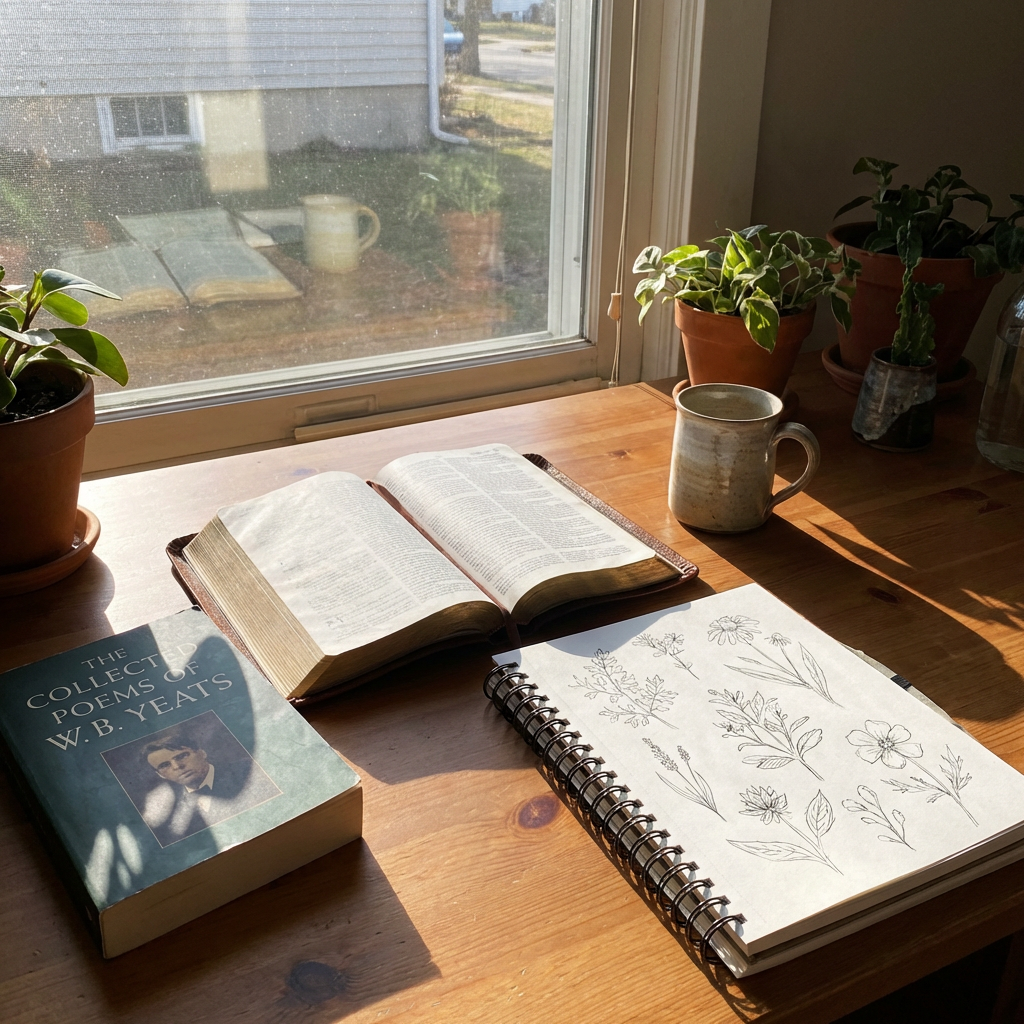
“For by him all things were created, in heaven and on earth, visible and invisible… all things were created through him and for him. And he is before all things, and in him all things hold together.” — Colossians 1:16-17 Lately, I have been convicted of a quiet failure: I have stopped practicing the discipline…
-

During my first year in a Master’s program, I was a “deer in the headlights” who happened to stumble into a course on George MacDonald. I knew he was admired by C.S. Lewis and J.R.R. Tolkien, so I gave him a shot. Little did I know that three years later, I would be finishing a…